


Reviewed by Coach Sun Ping, Head Coach & Founder, Fly Once Gymnastics · Last updated 16 November 2026
Quick answer: Most children can start rhythmic gymnastics at age 4, in play-based classes that build balance, rhythm and listening skills. Ages 4 to 6 are ideal for building flexibility and coordination. Children who start at 7 or older can still join beginner classes, and competitive levels begin around age 6.
“Is my child too young?” and “Is it too late?” are the two questions we hear most from parents. The good news is that there’s a right class for almost every age.
This guide walks through what rhythmic gymnastics looks like at each age, the signs your child is ready, and when competitive training usually starts.
What is the best age to start rhythmic gymnastics?
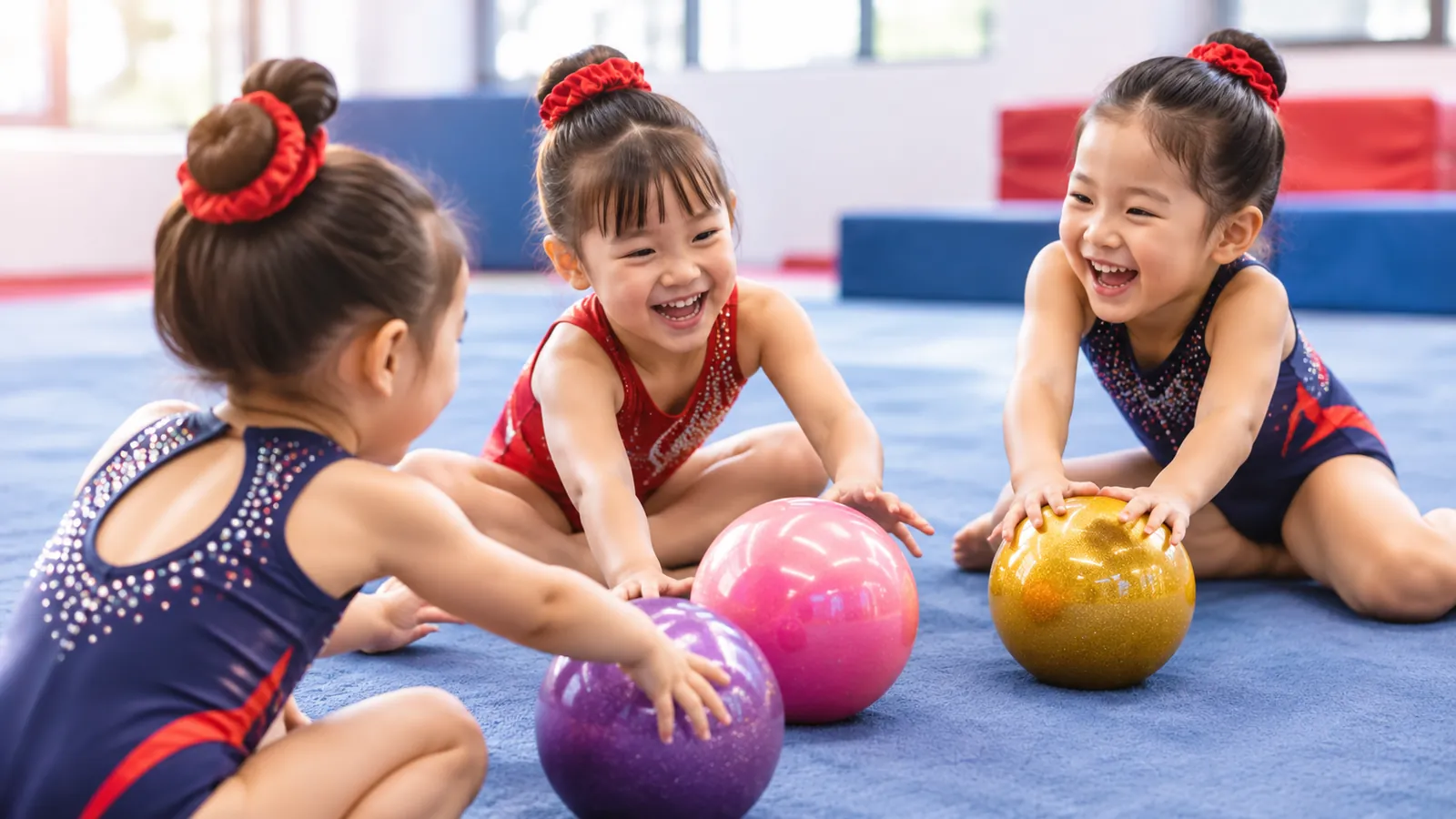
The best age to start is between 4 and 6. Children at this age pick up flexibility, balance and coordination quickly, and they learn best through games and music rather than drills.
That doesn’t mean older children miss out. Recreational classes welcome beginners of any age, and many gymnasts who start at 7 or 8 go on to compete.
What does rhythmic gymnastics look like at each age?
| Age | What classes focus on | At Fly Once |
|---|---|---|
| 4 | Physical development and basic movement skills through fun games; listening and following instructions | Bubbly |
| 5 | Balance, jumps, turns, stretching, basic apparatus skills, listening and focus | Graceful Moves |
| 6 | Building on basics; children with potential may be invited to pre-competitive training | Placed after a trial assessment |
| 7+ (new to the sport) | Flexibility, leaps, balances, turns and apparatus work, following National Programme levels | Blossom (Beginner) |
| 7+ (with some experience) | Apparatus technique, full routines, performance | Intermediate, then Advanced |
| 5+ (competitive) | Competition routines on one of two Singapore Gymnastics pathways | National Pathway (Levels 1–8) or Elite Pathway |
Is my 4-year-old ready for gymnastics class?
Most 4-year-olds are ready if they can follow simple instructions and join a group activity for 45 minutes to an hour without a parent beside them. They don’t need any flexibility or experience.
Signs your child is ready:
- They enjoy dancing, jumping or moving to music
- They can take turns and listen to a teacher
- They’re curious to try new things, even if they’re a little shy at first
At Fly Once, first classes are designed to make that first step less intimidating, with patient demonstrations, gentle guidance and lots of encouragement.
Is it too late to start at 8, 9 or 10?
It’s not too late for recreational classes. Children aged 7 and above with no experience start in a beginner class and learn at their own pace.
Starting later does make the Elite Pathway harder to reach, because it follows age groups and elite gymnasts usually train from a young age. The National Pathway, which focuses on participation and strong basics, is open to gymnasts who start later. But many late starters still compete at their level, and the benefits for fitness, posture and confidence are the same at any age.
When does competitive rhythmic gymnastics start?
Competitive training usually starts around age 6 (from 5 on the Elite Pathway, by assessment). Singapore Gymnastics runs two separate pathways, and a coach recommends the one that suits each child:
- National Pathway: focuses on participation and strong basics, from Level 1 to Level 8. Level 1 is typically for ages 6 to 7.
- Elite Pathway: prepares gymnasts for high-level national and international competition, following World Gymnastics age groups from age 6.
| National Pathway level | L1 | L2 | L3 | L4 | L5 | L6 | L7 | L8 |
|---|---|---|---|---|---|---|---|---|
| Typical age | 6–7 | 7–10 | 8–11 | 9–12 | 11–14 | 13–16 | 15–16 | 17+ |
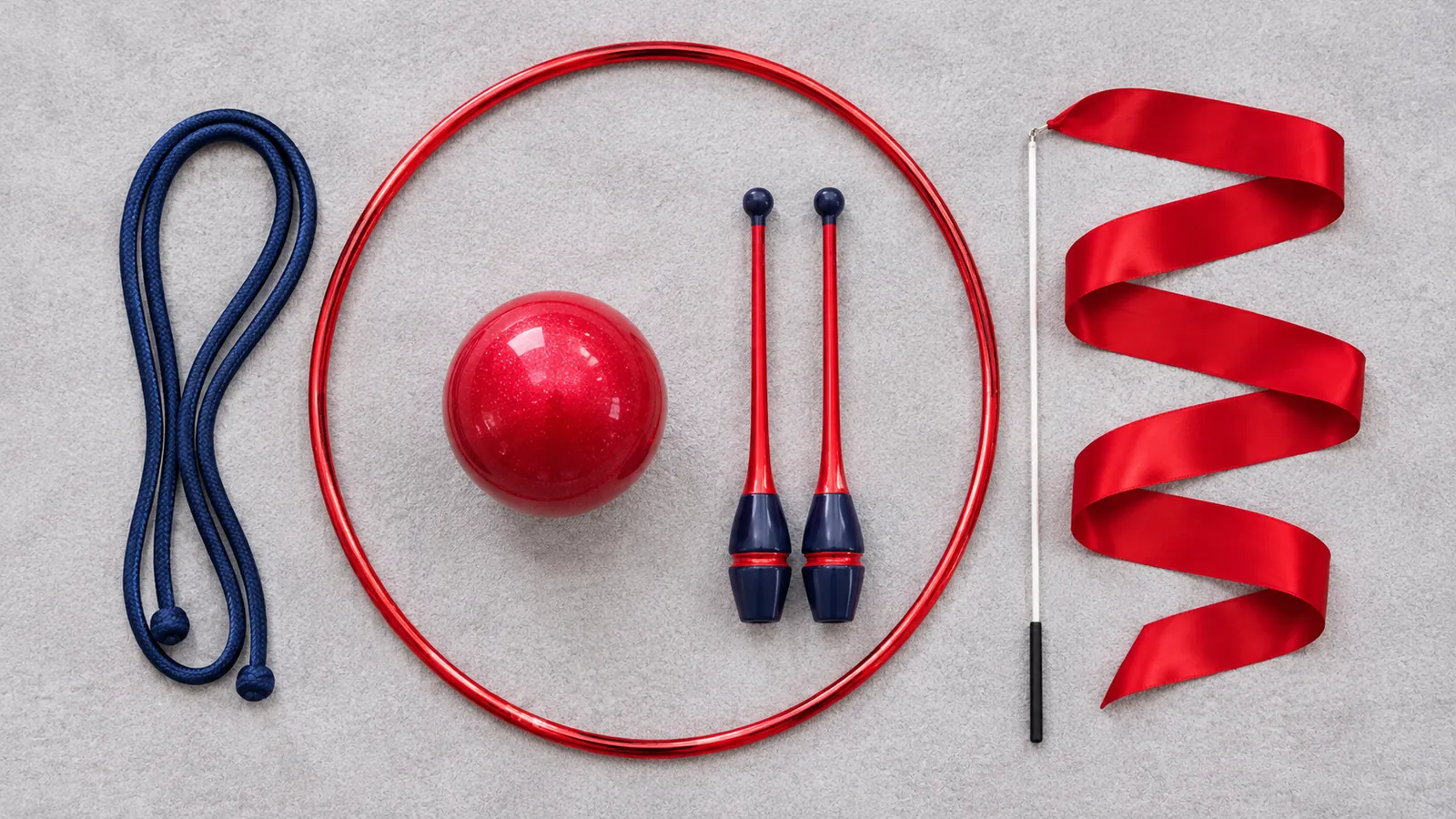
Ages are a guide; coaches place each gymnast by skill level. On the Elite Pathway, ages 6 to 9 include a freehand routine (from age 10 it’s apparatus only), and apparatus is added year by year: ball at 7, hoop at 8, clubs at 9, and ribbon from 11.
Children usually join competitive training by invitation or after an assessment, once a coach sees the right mix of flexibility, coordination and commitment.
What are the benefits of starting young?
Starting young gives children a head start on flexibility and coordination, but the biggest benefits go beyond the gym:
- Focus and discipline: learning a routine means listening carefully and practising patiently
- Confidence: every new skill mastered is something to be proud of
- Social skills: children learn to take turns, encourage each other and work as a team
- Healthy habits: an active hobby they enjoy can last for years
How do I get started?
The easiest first step is a trial class. At Fly Once, a trial class is one hour. Our coaches will see your child’s current ability and recommend the right class within 3–5 working days.
January is a natural time to start, as classes settle into a routine with the new school term.
Unsure whether rhythmic or artistic gymnastics suits your child better? Read rhythmic vs artistic gymnastics. For more on how classes and levels work, see our parent’s guide to rhythmic gymnastics classes in Singapore.
Ready to try? Book a trial class or WhatsApp us at +65 8126 0601.
Frequently asked questions
What is the best age to start rhythmic gymnastics?
Between 4 and 6 is ideal, because children build flexibility and coordination quickly at this age. Children aged 7 and above can still start in a beginner class.
Can a 3-year-old do rhythmic gymnastics?
Most rhythmic gymnastics classes, including Fly Once’s, start at age 4, when children can follow instructions in a group class without a parent.
Is 10 too old to start rhythmic gymnastics?
No. Children aged 10 can join a beginner class and enjoy the sport. Reaching the top competitive levels is harder for late starters, but many still compete at their level.
Does my child need to be flexible before starting?
No. Flexibility is built in class. Coaches stretch children gradually and safely according to their age.
At what age do children start competing?
On Singapore’s National Pathway, Level 1 is typically for children aged 6 to 7, and at Fly Once the Elite Pathway starts from age 5, by assessment. Children usually join competitive training after a coach’s invitation or assessment.
How long is a trial class at Fly Once?
A trial class at Fly Once is one hour, including a coach assessment and programme recommendation.