

Reviewed by Coach Sun Ping (Head Coach & Founder) and Coach Dub (Artistic Coach), Fly Once Gymnastics · Last updated 12 November 2026
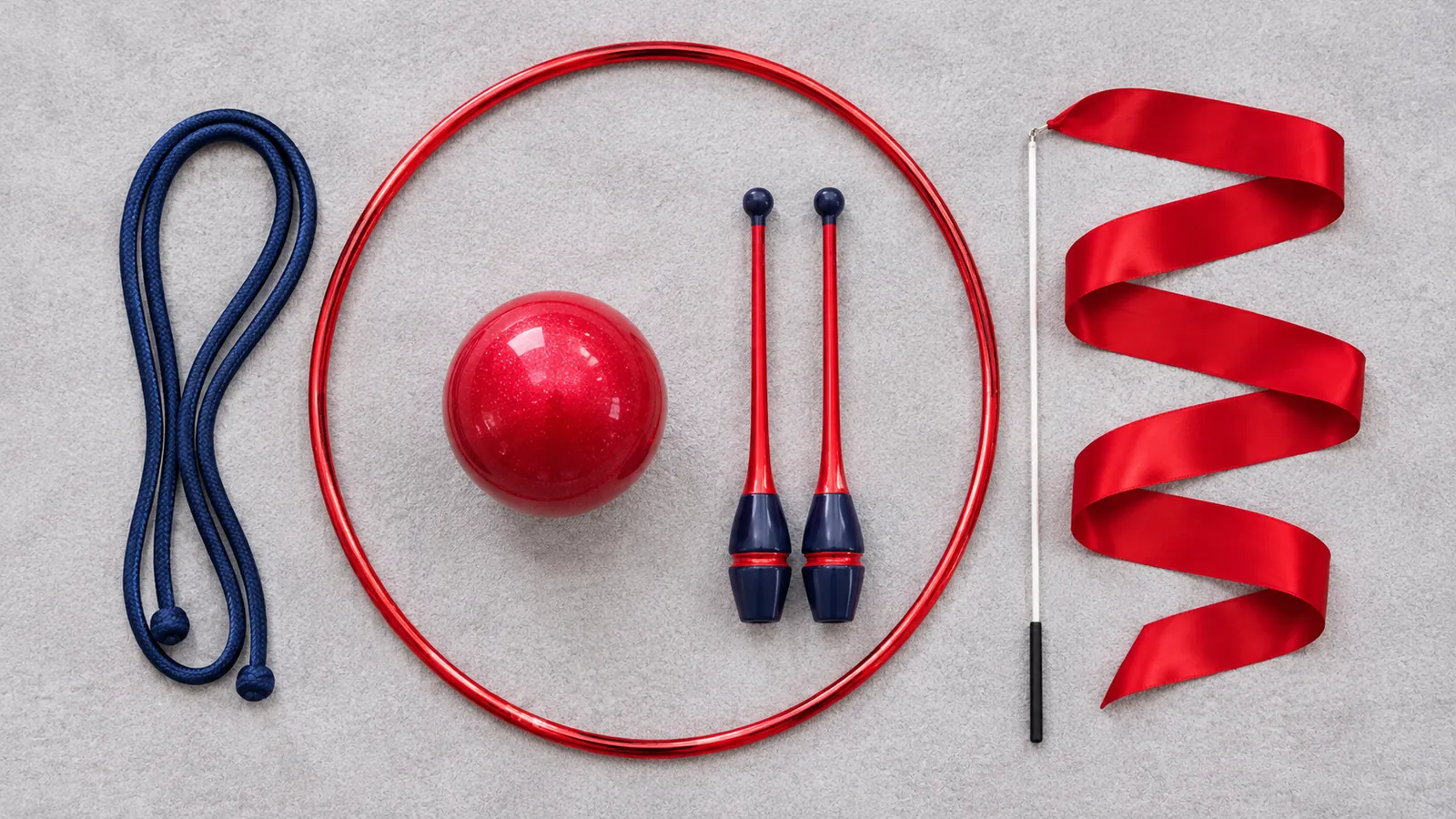
Quick answer: Rhythmic gymnastics combines dance and ballet with hand apparatus (rope, hoop, ball, clubs and ribbon) on a floor mat. Artistic gymnastics uses fixed equipment such as the vault, bars, beam and floor, and focuses on strength and acrobatics. Children who love music and movement often enjoy rhythmic; children who love climbing, jumping and flipping often enjoy artistic.
Rhythmic and artistic gymnastics are both Olympic sports, and both build strength, flexibility and confidence. But they look and feel very different, and most children have a clear preference once they try each one.
This guide explains the difference between rhythmic and artistic gymnastics, what each one trains, and how to choose for your child in Singapore.
What is the difference between rhythmic and artistic gymnastics?
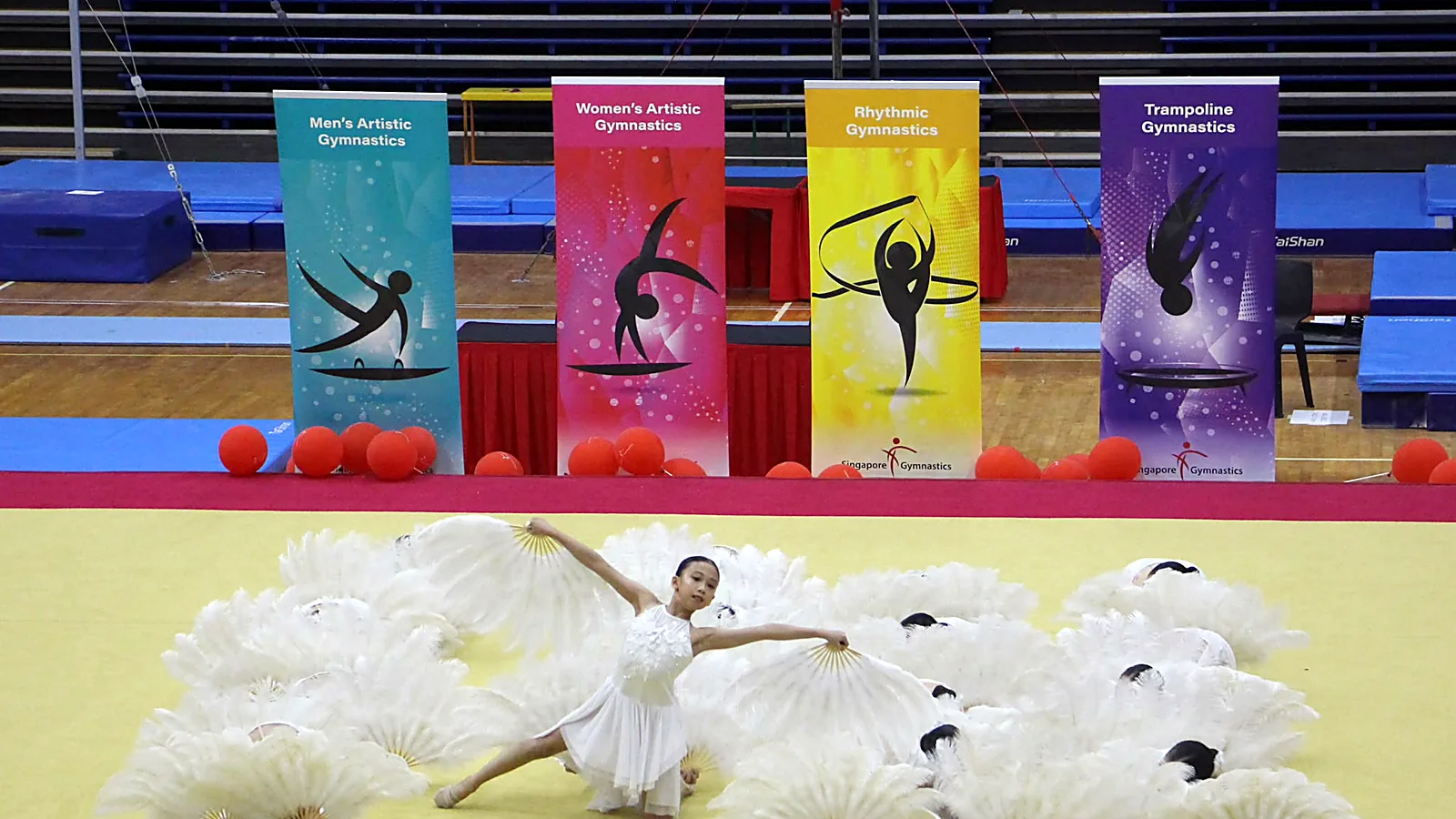
The main difference is the equipment. Rhythmic gymnasts perform on a floor mat with hand-held apparatus, set to music. Artistic gymnasts perform on fixed apparatus such as bars and beam.
| Rhythmic gymnastics | Artistic gymnastics | |
|---|---|---|
| Equipment | Rope, hoop, ball, clubs, ribbon, plus freehand routines | Women: vault, uneven bars, balance beam, floor. Men: floor, pommel horse, rings, vault, parallel bars, high bar |
| What it looks like | Dance, leaps, turns and balances while throwing and catching apparatus | Flips, handsprings, swings and landings |
| Key skills | Flexibility, coordination, musicality, expression | Strength, power, body control, courage |
| Music | Every routine is set to music | Only the women’s floor routine uses music |
| Who competes in Singapore | Girls | Girls (WAG) and boys (MAG) |
| Typical starting age | From 4 | From 3–4 in play-based classes |
What does rhythmic gymnastics train?
Rhythmic gymnastics trains flexibility, coordination and artistry. Gymnasts learn to leap, turn and balance while handling an apparatus, so hand-eye coordination and timing improve quickly.
Because every routine is choreographed to music, rhythmic also builds musicality, posture and stage confidence. Many rhythmic gymnasts also take ballet or dance, and the two support each other well.
What does artistic gymnastics train?
Artistic gymnastics trains strength, power and body awareness. Children learn rolls, cartwheels, handstands and jumps first, then progress to vaults, bar swings and beam skills.
It suits children who are always climbing, jumping and hanging off things at home. It also builds courage, because each new skill means trying something that feels a little scary at first, with a coach spotting them.
Which one suits my child?
Watch what your child already enjoys. These signs can help:
| Your child… | Try first |
|---|---|
| Dances around the house to music | Rhythmic |
| Is naturally flexible and enjoys stretching | Rhythmic |
| Loves ballet or dance classes | Rhythmic |
| Climbs everything and hangs off playground bars | Artistic |
| Loves jumping, rolling and trying cartwheels | Artistic |
| Is a boy who wants to compete in gymnastics | Artistic (rhythmic competitions in Singapore are for girls) |
If you’re still unsure, book a trial class in each. Most children show a preference within the first session.
Can my child do both?
Yes, especially when they’re young. Basic movement skills such as balance, rolls, jumps and flexibility help in both sports. As children move into competitive training, most choose one discipline, because competitive programmes need several sessions a week.
How do competitions work in Singapore?
Both sports follow a level system run by Singapore Gymnastics, the national body. Gymnasts start at Level 1 and move up as their skills grow.
| Rhythmic | Artistic | |
|---|---|---|
| Entry-level events | Singapore Gymnastics Carnival (Levels 1–3), Junior National Championships | Singapore Gymnastics Carnival (Levels 1–3), Junior National Championships |
| Higher-level events | Singapore Open, National Championships, Gymnastics Classic | Singapore Open, National Championships, Gymnastics Classic |
| International pathway | FIG / World Gymnastics age groups, Junior and Senior | FIG / World Gymnastics Junior and Senior |
Rhythmic and artistic gymnastics at Fly Once
Fly Once teaches both disciplines. Our rhythmic programmes are led by Head Coach and founder Sun Ping, a certified FIG coach and Singapore Gymnastics judge with more than 32 years of coaching, and Fly Once is a Singapore Gymnastics Rhythmic Pathway Club.
Our artistic coaches include Coach Dub, who has more than 20 years in gymnastics and coaches both women’s and men’s artistic gymnastics. He is accredited as an FIG Men’s Artistic Gymnastics Judge (Level 2), Women’s Artistic Judge (Level 1) and Trampoline Judge (Level 1).
Not sure which to choose? Book a one-hour trial class and our coaches will assess your child and recommend the right programme. For a full guide to ages, levels and trial classes, read our parent’s guide to rhythmic gymnastics classes in Singapore.
Ready to try? Book a trial class or WhatsApp us at +65 8126 0601.
Frequently asked questions
What is the main difference between rhythmic and artistic gymnastics?
Rhythmic gymnastics uses hand apparatus such as rope, hoop, ball, clubs and ribbon, performed to music on a floor mat. Artistic gymnastics uses fixed equipment such as the vault, bars, beam and floor.
Which is harder, rhythmic or artistic gymnastics?
Neither is easier. Rhythmic needs exceptional flexibility, coordination and artistry, while artistic needs strength, power and courage. The better fit depends on your child’s natural strengths.
Can boys do rhythmic gymnastics in Singapore?
Rhythmic gymnastics competitions in Singapore are for girls. Boys who enjoy gymnastics can join artistic gymnastics, which has men’s events.
What age can my child start artistic gymnastics?
Many children start artistic gymnastics from age 3 or 4 in play-based kinder classes that teach rolls, jumps and balance.
Does Fly Once teach both rhythmic and artistic gymnastics?
Yes. Fly Once offers rhythmic gymnastics from age 4 to elite level, and artistic gymnastics for girls and boys, including kinder classes.
How long is a trial class at Fly Once?
A trial class at Fly Once is one hour, including a coach assessment and programme recommendation.