

Reviewed by Coach Sun Ping, Head Coach & Founder, Fly Once Gymnastics · Last updated 22 November 2026
Quick answer: Rhythmic gymnastics builds flexibility, posture, coordination and musicality, but its biggest benefits go beyond the body. Children learn focus, discipline, confidence and resilience as they practise routines, and they build friendships and teamwork in class. It also gives them an active hobby they can enjoy for years.
Parents usually come to rhythmic gymnastics for the flexibility and grace. They stay because of what it does for their child’s confidence and character.
Here are seven benefits of rhythmic gymnastics for kids, and how classes build each one at different ages.
1. Flexibility and good posture
Rhythmic gymnastics is one of the best sports for flexibility. Every class includes stretching, and skills such as leaps, splits and balances build a strong, flexible body over time.
Gymnasts also learn to stand and move with an upright, open posture, which many parents notice in everyday life. Coaches stretch children gradually and safely according to their age, so no flexibility is needed to start.
2. Coordination and motor skills
Handling an apparatus while leaping, turning and balancing takes a lot of coordination. Children learn to throw and catch a ball, spin a hoop and keep a ribbon moving, all while controlling their body.
For young children, this builds the fundamental movement skills, such as balance, jumping and hand-eye coordination, that help in every other sport too.
3. Focus and discipline
Learning a routine means listening carefully, remembering sequences and practising the same skill until it’s right. Children learn to pay attention for longer and to keep going when something is hard.
Many families find these habits carry over into schoolwork and daily routines.
4. Confidence
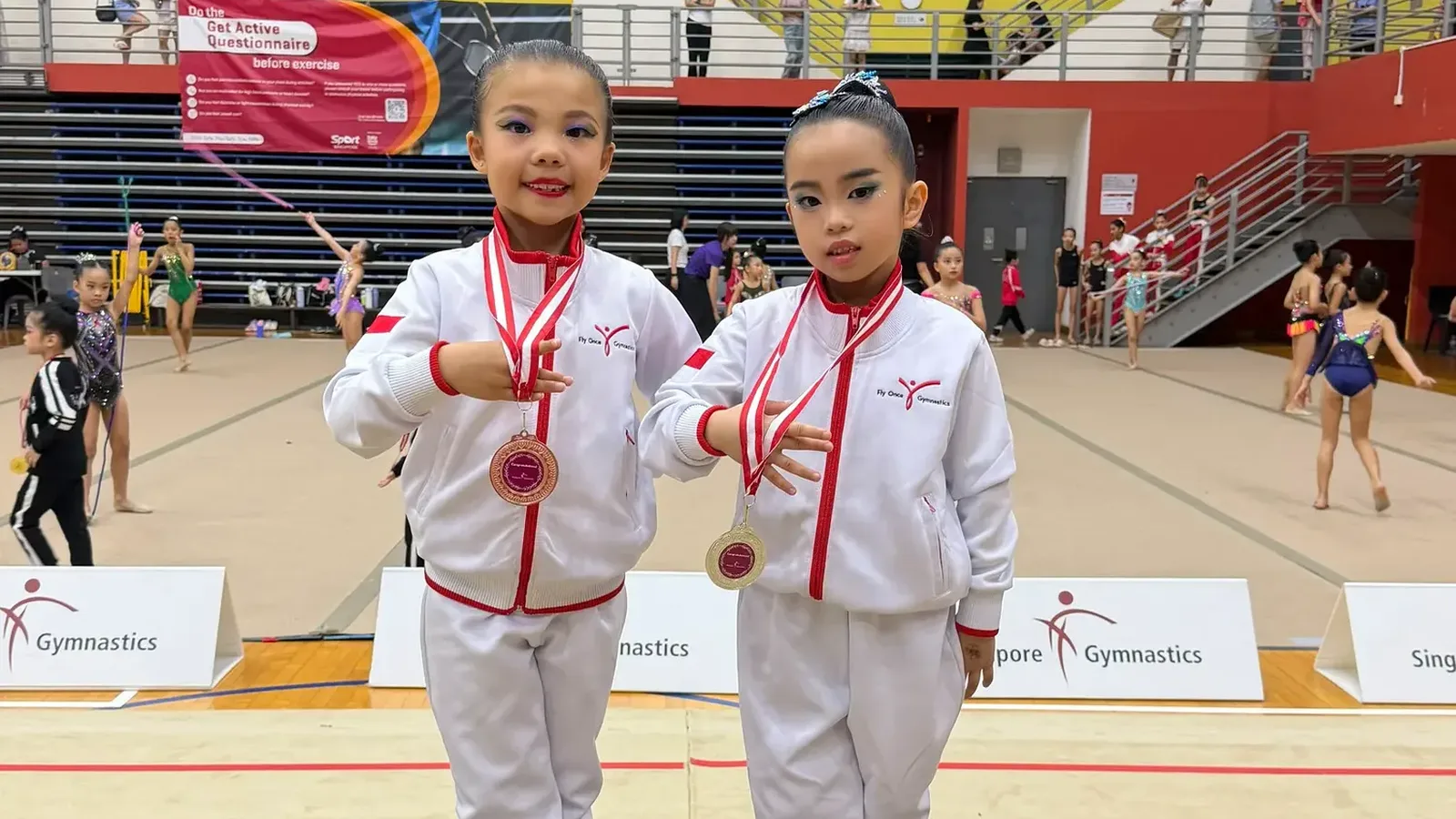
Every new skill a child masters is something to be proud of, whether it’s a first cartwheel or a clean catch of a spinning hoop. Performing in front of coaches, parents and judges also builds stage confidence.
At Fly Once, we believe every brave attempt deserves to be seen. Children receive patient guidance and encouragement, so they feel safe to try new things.
5. Resilience
Not every throw is caught the first time. Rhythmic gymnastics teaches children that mistakes are part of learning: pick up the apparatus and try again.
This resilience, the courage to try again after a setback, is one of the most valuable things a child can learn from any sport.
6. Musicality and creativity
Every rhythmic routine is set to music. Children learn rhythm, timing and how to express a mood through movement, which makes rhythmic gymnastics as much an art as a sport.
Older gymnasts help shape the choreography of their own routines, which builds creativity and artistic expression.
7. Friendship and teamwork
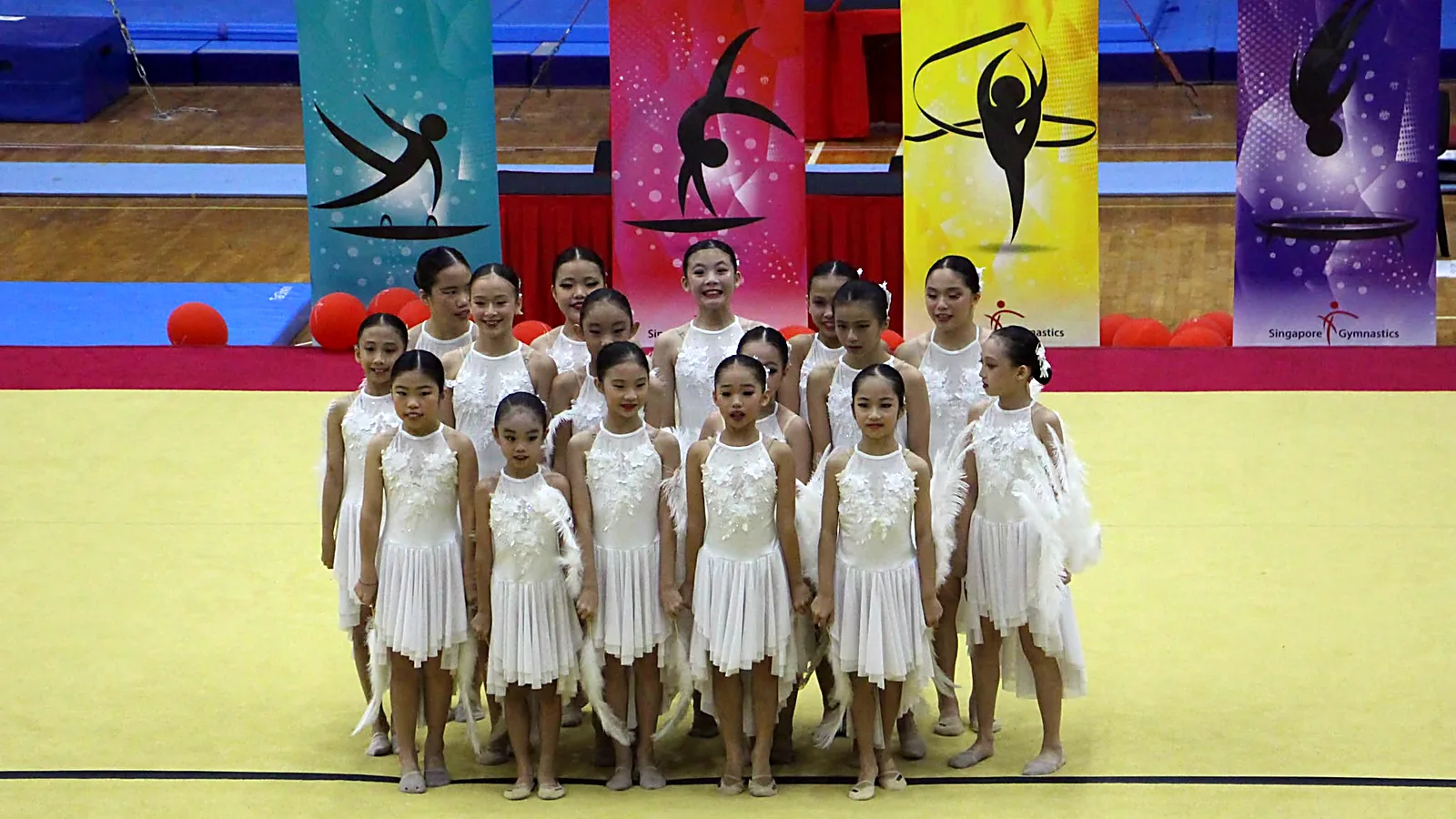
Classes are a social experience. Children learn to take turns, encourage each other and celebrate each other’s progress. Competitive gymnasts also train and travel as a team.
These friendships are often what keeps children coming back to training year after year.
What benefits can I expect at each age?
| Age | Main benefits |
|---|---|
| 4–6 | Balance, coordination, listening skills, confidence in a group, love of movement |
| 7–9 | Flexibility, apparatus skills, focus, discipline, first performances |
| 10+ | Strength, artistry, resilience, time management, teamwork in competition |
Is rhythmic gymnastics good for my child?
Rhythmic gymnastics suits most children, especially those who enjoy music, dance and movement. It’s a non-contact sport, and classes are adapted to each child’s age and stage.
If your child has a health condition or injury, talk to your doctor and let the coach know before starting, so training can be adjusted.
More than medals at Fly Once
At Fly Once, we believe medals mark a competition, but character lasts a lifetime. Our classes are built around encouragement, so children grow in confidence, focus and perseverance, on and off the floor.
Our rhythmic programme is led by Head Coach and founder Sun Ping, a certified FIG coach and Singapore Gymnastics judge with more than 32 years of coaching. Classes start from age 4 and run all the way to competitive training.
Wondering when to start? Read what age to start rhythmic gymnastics, or see our parent’s guide to rhythmic gymnastics classes in Singapore.
Ready to try? Book a trial class or WhatsApp us at +65 8126 0601.
Frequently asked questions
What are the benefits of rhythmic gymnastics for kids?
Rhythmic gymnastics builds flexibility, posture, coordination and musicality, as well as focus, discipline, confidence, resilience and teamwork.
Is rhythmic gymnastics good for shy children?
Yes. Classes are built around encouragement, and mastering new skills step by step helps shy children grow in confidence and feel comfortable in a group.
Does my child need to be flexible to benefit?
No. Flexibility is built in class, with coaches stretching children gradually and safely according to their age.
Is rhythmic gymnastics safe for young children?
Rhythmic gymnastics is a non-contact sport, and classes are adapted to each child’s age. Choose a club with coaches trained in Safe Sport and First Aid.
Can rhythmic gymnastics help with schoolwork?
Many families find that the focus and discipline children learn in training carry over into schoolwork and daily routines.
How long is a trial class at Fly Once?
A trial class at Fly Once is one hour, including a coach assessment and programme recommendation.