

Reviewed by Coach Sun Ping, Head Coach & Founder, Fly Once Gymnastics · Last updated 24 November 2026
Quick answer: A school rhythmic gymnastics CCA is a great, affordable way to train with classmates and compete for your school at the National School Games. Club training offers more hours, year-round coaching and Singapore Gymnastics competitions on the National or Elite Pathway. Many girls do both: the CCA for school spirit and the club for faster progress.
Rhythmic gymnastics is a popular CCA in many Singapore girls’ schools. So if your daughter’s school has a CCA, do you still need a club? And if her school doesn’t offer one, is a club the only option?
This guide compares school CCAs and club training, and explains why many gymnasts do both.
What is the difference between a CCA and club training?
| School CCA | Club training | |
|---|---|---|
| Where | At school, after lessons | At the club’s gym or a sports centre |
| Training time | Set by the school, usually a few sessions a week during term | From 2 hours a week (recreational) to 4 hours, 5–6 times a week (Elite) |
| Holidays | Usually paused or reduced | Classes continue, with holiday training |
| Main competition | National School Games (NSG) | Singapore Gymnastics events: Carnival, Junior Nationals, Singapore Open, National Championships, Gymnastics Classic |
| Progression | School team for NSG | National Pathway (Levels 1–8) or Elite Pathway |
| Group | Classmates and schoolmates | Gymnasts grouped by level and age |
| Cost | Usually lower, paid through school | Club fees by programme |
What are the benefits of a school CCA?
- Convenience: training happens at school, so there’s no extra travel.
- School spirit: your daughter trains and competes with her friends and represents her school.
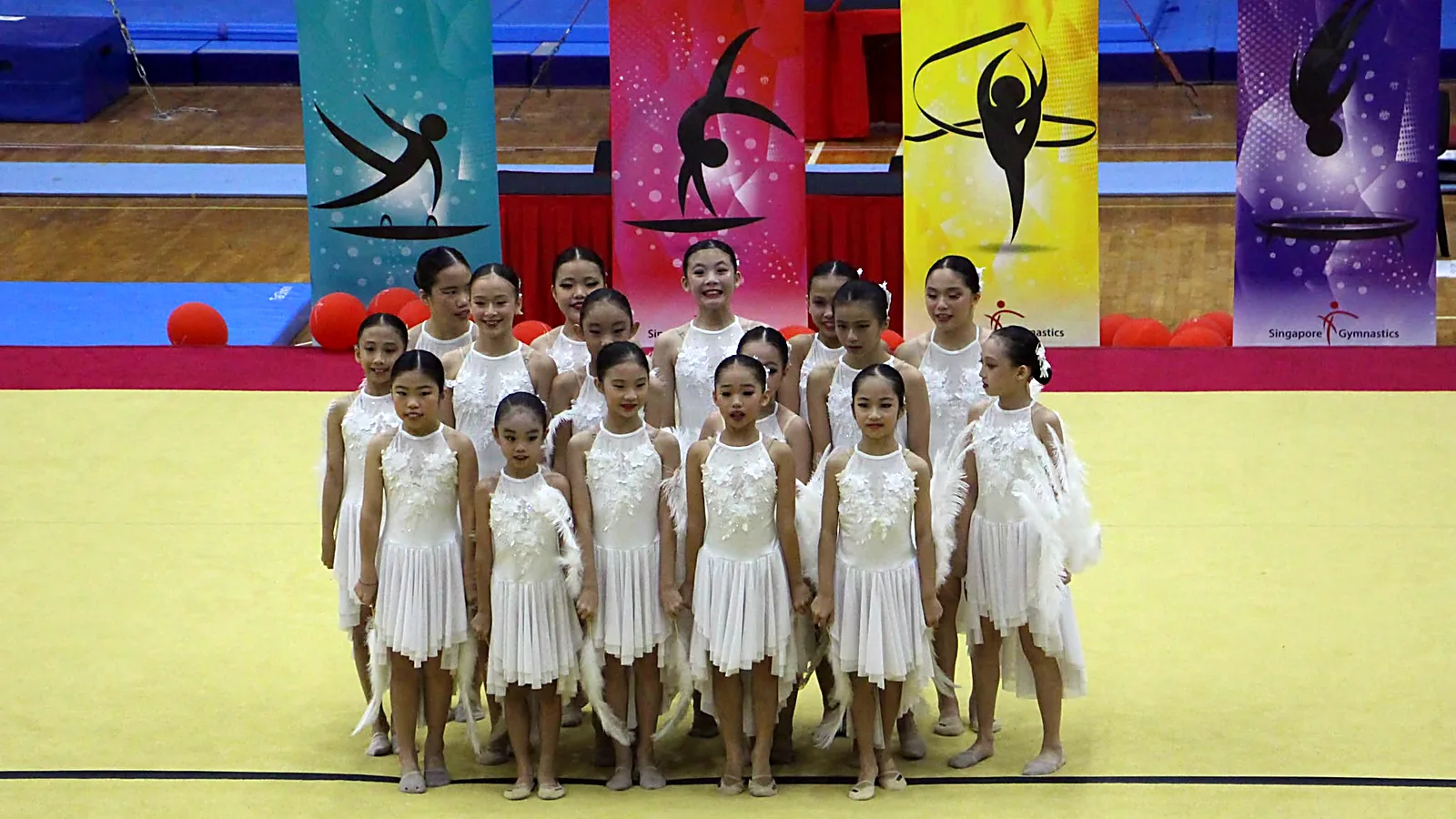
- National School Games: school teams compete at the NSG, one of the most exciting events of the school year.
- Cost: CCAs are usually much more affordable than private training.
Many school CCAs are coached by experienced external coaches. Fly Once coaches lead school CCA programmes, and our Head Coach Sun Ping has led school teams to National School Games titles.
What are the benefits of club training?
- More training time: clubs offer more hours and train through the school holidays, so skills build faster.
- Level-based groups: gymnasts train with others at the same level, with a clear next step.
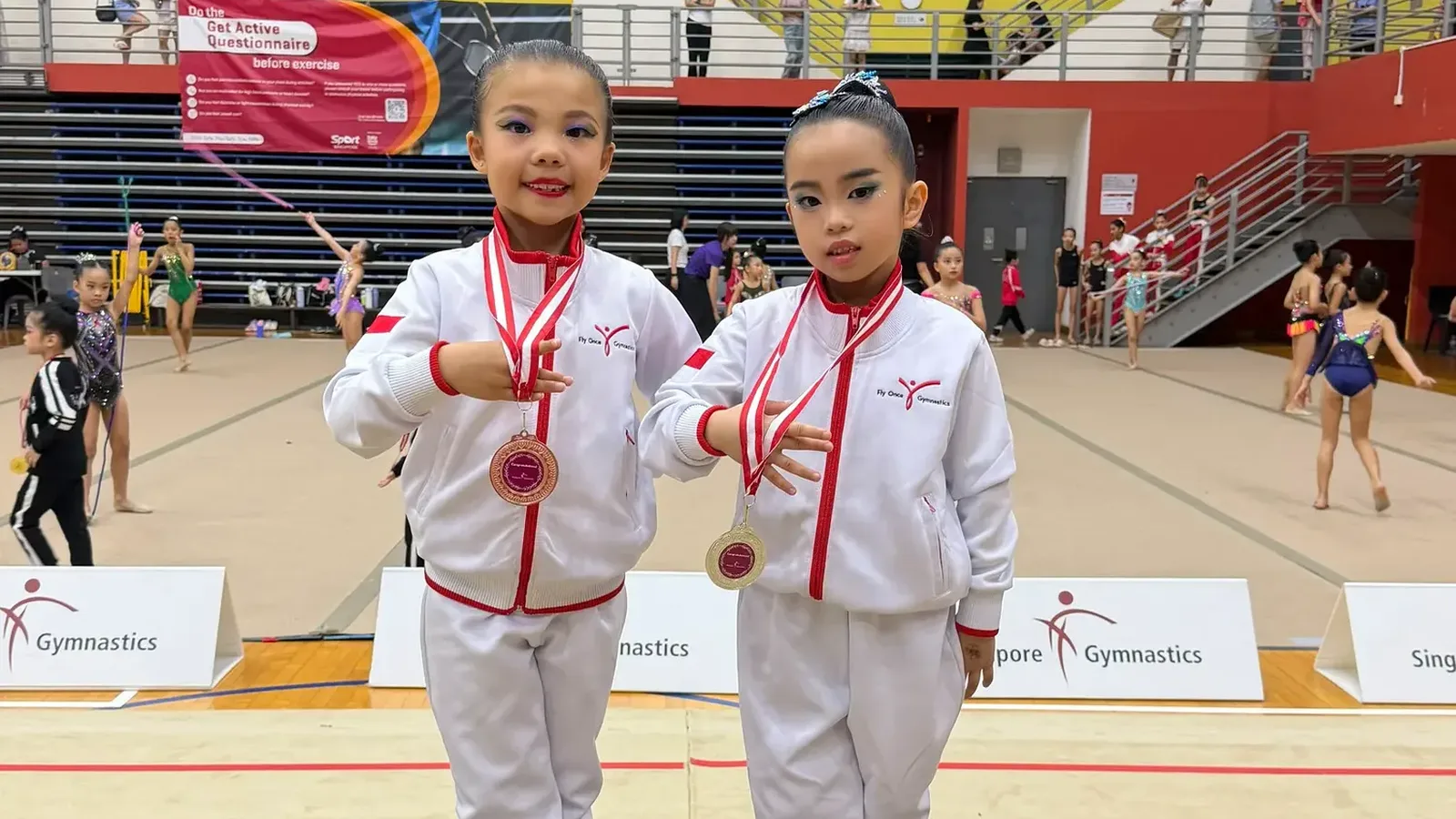
- Singapore Gymnastics competitions: clubs enter gymnasts in national events on the National Pathway or Elite Pathway.
- High-performance opportunities: clubs recognised as Singapore Gymnastics Pathway Clubs support gymnasts selected for the Singapore Gymnastics Development Programme (SGDP) and National Squads.
Can my daughter do both?
Yes, and many do. The CCA gives your daughter time with schoolmates and the chance to compete at the NSG, while club training adds hours, holiday training and national competitions.
If she does both, talk to her CCA teacher and club coach so they know her full schedule. This helps avoid overtraining, especially before competitions and exams.
What if her school doesn’t offer a rhythmic gymnastics CCA?
Not every school has a rhythmic gymnastics CCA. In that case, a club is the best way for your daughter to train and compete. Club gymnasts can still enjoy competitions, a team environment and a clear pathway, even without a school team.
Does rhythmic gymnastics help with DSA?
Some secondary schools offer Direct School Admission (DSA) places for rhythmic gymnastics. Schools set their own criteria, which may include trials, competition results and coach recommendations.
If DSA is a goal, check each school’s DSA page early. Competition experience from both NSG and Singapore Gymnastics events can help show your daughter’s level and commitment.
Which option is right for my daughter?
| If your daughter… | Consider |
|---|---|
| Wants to try rhythmic gymnastics with friends | School CCA |
| Enjoys it and wants to improve faster | CCA plus club recreational classes |
| Wants to compete in Singapore Gymnastics events | Club, National Pathway |
| Shows strong potential and commitment | Club, Elite Pathway |
| Has no CCA option at school | Club classes |
Rhythmic gymnastics at Fly Once
Fly Once welcomes CCA gymnasts who want extra training, as well as complete beginners. Our classes run from age 4 to competitive training on both the National and Elite Pathways, and Fly Once is a Singapore Gymnastics Rhythmic Pathway Club.
Gymnasts with CCA experience can come for a trial and assessment, and our coaches will recommend the right level. For more on how competitive levels work, read National Pathway vs Elite Pathway, or see how to compare clubs in choosing a gymnastics school in Singapore.
Ready to try? Book a trial class or WhatsApp us at +65 8126 0601.
Frequently asked questions
What is the difference between a rhythmic gymnastics CCA and a club?
A school CCA trains at school and competes at the National School Games. A club offers more training hours, holiday classes and Singapore Gymnastics competitions on the National or Elite Pathway.
Can my daughter join a club if she’s already in the school CCA?
Yes. Many gymnasts do both. Let her CCA teacher and club coach know her full schedule to avoid overtraining.
What competitions do school CCA teams take part in?
School rhythmic gymnastics teams compete at the National School Games (NSG).
What if my daughter’s school has no rhythmic gymnastics CCA?
She can train and compete through a club. Club gymnasts take part in Singapore Gymnastics competitions and train in level-based groups.
Does rhythmic gymnastics help with DSA?
Some secondary schools offer DSA places for rhythmic gymnastics. Each school sets its own criteria, so check the school’s DSA page early.
How long is a trial class at Fly Once?
A trial class at Fly Once is one hour, including a coach assessment and programme recommendation.